

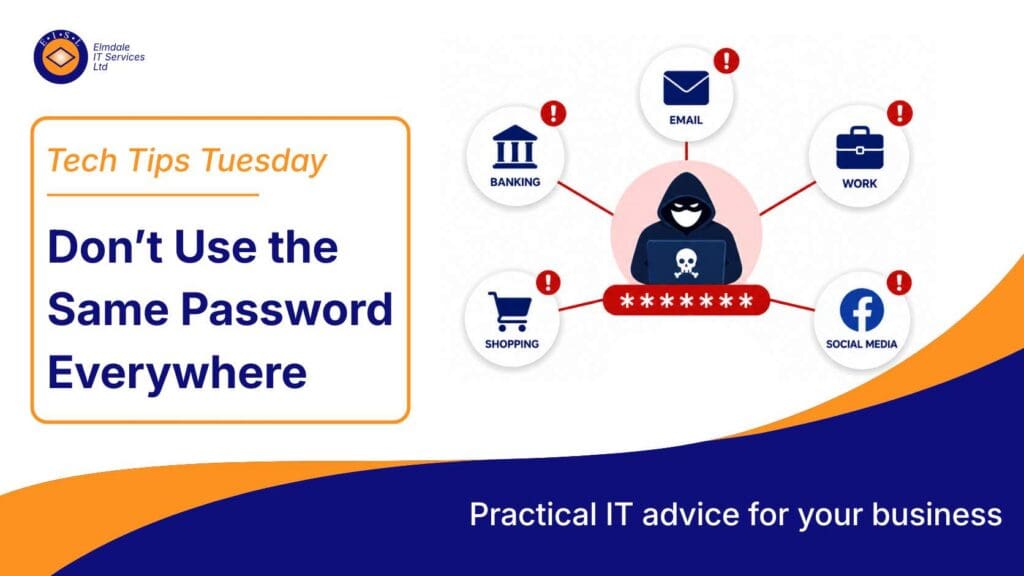
We all know passwords can be annoying. Every website, app, system, and account seems to want one. Because of that, it is very tempting to use the same password everywhere.
It feels easier. It feels faster. You know you will remember it.
But it is also one of the biggest security risks for both individuals and businesses.
Why using the same password is dangerous
The problem is simple. If one website or service is compromised, your password could end up in the hands of criminals.
They will then try that same email address and password combination across lots of other services, such as Microsoft 365, online banking, social media, shopping accounts, remote access portals, and cloud systems.
This is called credential stuffing.
The criminal does not need to hack your company directly. They only need to find one old leaked password and try it elsewhere.
One weak password can open many doors
Imagine using the same password for your work email, personal email, online shopping, social media, cloud storage and remote working systems.
If that password is exposed once, it could put all of those accounts at risk.
For a business, the impact can be serious. A compromised email account can lead to fake invoices, data theft, phishing emails being sent to customers, and access to sensitive company files.
What should you do instead?
The best approach is to use a different strong password for every account.
A strong password should be long, difficult to guess, and not based on obvious personal information such as birthdays, pet names, football teams, or company names.
Better still, use a password manager. This allows you to create and store unique passwords securely without needing to remember them all.
Elmdale’s tip
Do not try to be clever by changing one character at the end of the same password, such as Password1, Password2, or Password3.
Criminals know people do this.
Use completely different passwords and switch on multi-factor authentication wherever possible.
Final thought
Passwords are still one of the most common ways attackers get into systems. The good news is that improving password habits is one of the easiest ways to reduce risk.
A unique password for every account is not just good practice. It is basic cyber hygiene.
Need help improving your business password security? Elmdale IT can help you put the right policies, tools, and protections in place.