

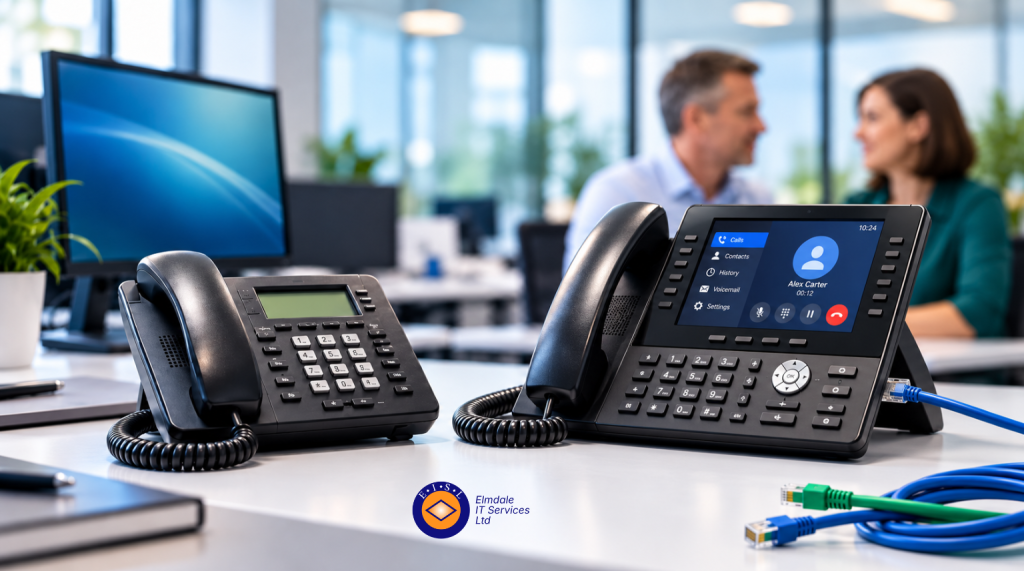
A phone system can appear to be doing its job right up to the moment it lets a customer down. Calls drop during busy periods, messages are missed, and staff start relying on personal mobiles to keep conversations moving. That is why replacing office phone systems is a question worth asking before an ageing setup creates a visible problem for customers, colleagues or the wider organisation.
For many businesses and schools, telephony has been left untouched because it is familiar and seemingly functional. Yet communications have changed. Teams work across sites and from home, customers expect quick answers, and technology decisions now need to support security, resilience and cost control as well as dial tone. Replacing a system is not about buying the newest handsets. It is about making everyday communication easier to manage and more reliable.
Why replace office phone systems before they hold you back?
The clearest reason is that an old phone system often creates hidden operational costs. A receptionist spends extra time transferring calls manually. Staff cannot see who is available to answer. Managers have little visibility of missed calls or peak demand. Changes such as adding an extension, moving a team or updating a recorded greeting require a costly engineer visit.
These issues may look minor in isolation. Over a year, however, they can affect customer service, staff productivity and the impression your organisation makes when people call. If a caller reaches voicemail repeatedly, waits in a queue with no information, or has to explain their query to several people, they may decide to contact another provider.
Older systems can also be difficult to support. Replacement parts become scarce, specialist knowledge is less readily available and a fault may take longer to diagnose. When communications are central to bookings, sales, safeguarding, supplier coordination or support requests, the risk of a prolonged outage is rarely acceptable.
There is also a wider change to consider. The UK’s traditional analogue phone network is being withdrawn, with the planned switch-off of the PSTN due by the end of 2027. Not every existing office system will stop working immediately, particularly where it already uses internet-based services, but organisations relying on analogue lines, older ISDN services or connected devices should understand their position early. A planned change gives you options. A rushed replacement after a service deadline or equipment failure usually does not.
The signs your current telephony needs attention
You do not need to wait for a complete failure to review your phone system. Frequent call quality issues, unexplained outages and handsets that fail regularly are obvious warning signs. So are growing maintenance charges and a supplier that cannot clearly explain the future of the service you use.
Flexibility is another useful test. If staff cannot take their usual office number when working remotely, if calls cannot be routed easily between locations, or if a temporary change to opening hours is unnecessarily complicated, the system may no longer reflect how your organisation operates. This is particularly relevant for businesses with hybrid teams, schools managing multiple departments, and organisations with satellite offices.
It is worth looking at the customer experience too. Can callers reach the right team without being passed around? Is there a sensible option for out-of-hours calls? Can someone step in when the usual person is unavailable? A modern system should help you answer calls consistently, rather than depend on one member of staff knowing how the old setup works.
What modern office phone systems can improve
Cloud-based VoIP telephony uses your internet connection to carry calls, while giving users access to business calling features through desk phones, computers or mobile applications. The right solution can retain your existing numbers, but make them far more useful.
For example, calls can ring a colleague’s desk phone and mobile app at the same time, allowing them to work from home without publishing a personal number. Teams can transfer calls with context, use presence information to see who is available, and set call-routing rules around working hours or departmental needs. For a busy office, this can reduce missed opportunities without making processes more complicated.
Managers can also gain clearer reporting. Call data may show how many calls are abandoned, when demand is highest, or whether certain teams need more cover. This should not be treated as surveillance. Used sensibly, it helps organisations plan staffing and improve how quickly callers receive help.
A well-designed system can improve resilience as well. If access to one office is disrupted, calls can be redirected to another site, a home worker or a nominated mobile device. That matters during local power issues, building problems or unexpected closures. It does depend on having suitable internet connectivity, appropriate backup arrangements and a clear continuity plan. VoIP is not a substitute for planning, but it can make that planning much more practical.
Security and compliance need to be part of the decision
Telephone systems are sometimes overlooked in cyber security discussions, despite being connected to the network and handling sensitive conversations. Unsupported equipment, weak administrator passwords and poorly configured remote access can create avoidable risks. Fraudulent calls and unauthorised international dialling can also lead to significant charges if safeguards are not in place.
A replacement project is an opportunity to review user access, call permissions and administration controls. Multi-factor authentication, strong passwords and sensible role-based access can help protect the system. Businesses handling personal, financial or confidential information should also consider how calls are recorded, stored and accessed, and whether recording is genuinely necessary for every team.
The appropriate level of security will vary. A small office with straightforward call handling has different requirements from a school, care provider or organisation with formal compliance obligations. The key is to choose a solution that matches the risk, rather than paying for features that are never used or accepting gaps that are difficult to explain later.
Replacing a system does not have to disrupt the business
Concern about disruption is one of the main reasons organisations postpone a telephony change. It is a reasonable concern. Phone numbers, reception workflows, door entry systems, alarm lines, broadband capacity and staff habits can all be connected to the existing setup. A poorly planned migration can cause confusion.
That is why the discovery stage matters as much as the technology. Before selecting a service, document every number, extension, call flow and connected device. Speak to the people who answer calls, not only the people who approve the budget. Reception staff, operations teams and department heads often understand the day-to-day gaps better than anyone else.
A good implementation can normally be phased around operational needs. Numbers can be ported at an agreed time, call flows tested in advance and staff given simple guidance on using the new phones and applications. In some cases, keeping a small number of physical desk phones makes sense. In others, a mix of handsets and softphones is better. The aim should be a system people will actually use confidently.
Choosing the right replacement for your organisation
The best phone system is not necessarily the one with the longest feature list. Start with how calls support your work. A professional services firm may need reliable routing to specialists and clear mobile working. A school may need dependable reception coverage, emergency considerations and simple communication between departments. A growing business may prioritise adding users without buying more on-site equipment.
Ask how the provider will assess your connectivity, support the change and respond if something goes wrong. The lowest monthly price can become expensive if the service is difficult to manage, call quality is inconsistent or support is remote and slow when you need help. Clear ownership, plain-English advice and responsive support are especially valuable when telephony is essential to your daily operation.
Elmdale IT Services helps organisations across the South of England assess, implement and support VoIP solutions around their actual working practices. That includes looking beyond the phones themselves to the network, security and business continuity measures that make communications dependable.
A replacement should leave your organisation better prepared for ordinary busy days as well as unexpected disruption. If your current phone system is limiting how people work, creating avoidable support costs or making callers work too hard to reach you, the right time to review it is while you can make the decision calmly and on your own terms.